
Products
Search
Categories
‹
›
‹
›
Description
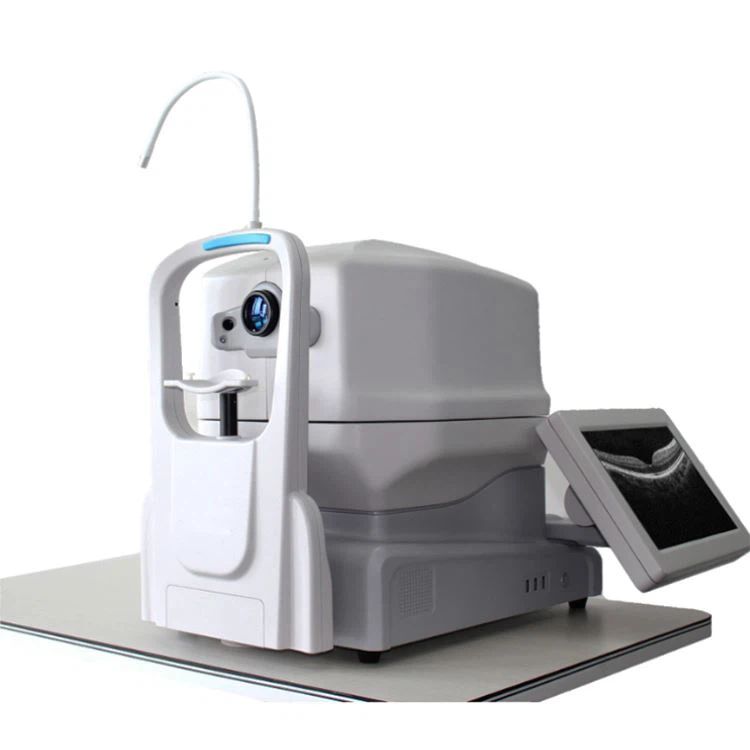
OCT-500 TOMOGRAPHY
The OCT-500 tomography features an all-in-one design with an optional larger external monitor, ensuring an installation-free experience.
Operation of the OCT-500 tomography is fully automated, requiring minimal human intervention. Smart pupil alignment and advanced signal optimization guarantee high-quality OCT images independent of operators.
The small footprint and all-in-one system fit perfectly in the smallest examination rooms. The flexible monitor location allows for various operator positions.
It is extremely easy to operate, making OCT-500 tomography accessible even without professional operators.
High-definition imaging and comprehensive analysis software.
More than 4 scan modes for precise identification of subtle lesions in the macular and optic parts.
The software generates a summary analysis of macular retina, RNFL (Retinal Nerve Fiber Layer), and ONH (Optic Nerve Head).
Progress analysis for follow-up examinations is available.
Features of OCT-500 Tomography
Superb Oct Technology Ready For Delegation
An easy-to-use, completely automated OCT with color fundus photography provides comprehensive analysis of glaucoma and retinal pathologies.
Follow-Up Scan
Easily retrieve, analyze, and compare past and current images for efficient eye care diagnosis.
More Details In Less Time
With a scanning speed of 50,000 A-scans/sec, OCT 500 allows for faster tomography acquisition, producing clear, high-definition cross-sectional retinal images through a simple interface.
Fully Automatic Oct With Simple Touchscreen
OCT 500 is the most user-friendly OCT available due to its fully automated function. With a single touch on the screen, eye focus, optimization, and image capture are performed automatically. After capture, the report can be displayed immediately with a single click.
Semi-Automatic Or Manual Capture
Choose between semi-automatic or manual mode to adjust alignment and scanning position for patients. Various functions are easily accessible on the touchscreen monitor.
True Color Fundus Photography
OCT 500 features an integrated full-color fundus camera. With one touch, you can simultaneously acquire a posterior OCT image and a fundus image. This fundus photo helps quickly locate the exact position of the OCT scan and provides additional information for diagnosing various retinal diseases.
What are the advantages of OCT-500 Tomography?
High-resolution non-invasive imaging
The OCT-500 Tomography generates detailed, cross-sectional images of the retina, optic nerve, and other ocular structures. This allows for precise visualization of various layers, enabling a comprehensive assessment of retinal health. Unlike invasive procedures, such as retinal biopsies, the OCT-500 Tomography is a non-invasive imaging technique. It eliminates the need for surgical intervention, making it safer, more comfortable for patients, and reducing the risk of complications.
Early detection, diagnosis, and progression
The device's high-resolution images are useful in detecting and diagnosing various ocular conditions such as macular degeneration, diabetic retinopathy, glaucoma, and retinal detachments. It assists in identifying these conditions at early stages, facilitating timely intervention and management. With periodic OCT scans, the progression of ocular diseases can be tracked over time. This information aids in evaluating the effectiveness of treatments and making adjustments accordingly.
GUIDING TREATMENT DECISIONS
The OCT-500 Tomography helps ophthalmologists in making informed decisions about treatment plans. By monitoring changes in the retinal layers and structures over time, it provides valuable insights into disease activity, response to treatment, and the need for any adjustment in therapy. The visual representation provided by the OCT scans also allows clinicians to educate patients about their ocular conditions. Showing them the images and discussing their significance enhances patients' understanding, facilitating their participation in treatment decisions.
Related Products
2. Mounted Retinoscope: The retinoscope quickly and accurately assesses a patient's refractive error. The device is also easy to use and requires minimal training for effective operation, making it an ideal tool for busy clinical settings, educational departments, or hospitals.
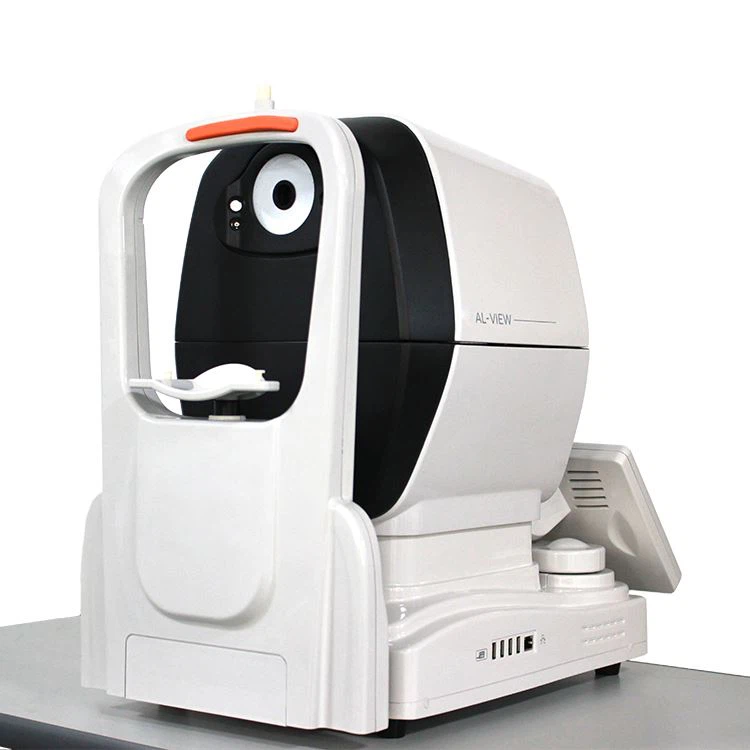
3. Advanced Optical Biometer: This advanced optical biometer provides highly accurate measurements for ophthalmic diagnosis. Unlike traditional ultrasound methods, this non-contact biometer offers precision that is 5 times greater without the need for local anesthesia or pupil dilation. Patients can expect a safe and comfortable experience with quick results.
4. Digital Fundus Camera: Digital fundus cameras, also known as retinal cameras, are highly specialized diagnostic medical devices designed for examining the interior surface of the eye. A fundus camera enables doctors and ophthalmologists to view the retina, optic disc, and other structures at the back of the eye in detail. This instrument is essential for routine eye checkups, ophthalmic surgery, and the diagnosis of various eye diseases.
5. Wide Field Fundus Photography: The RETICAM 3100 wide field fundus photography provides fundus color photos, FFA, FAF, non-red light, anterior photography, and small pupil imaging modes to meet the needs of medical institutions. It supports digital remote imaging and remote image transmission. This top-class fundus camera features a 24MP sensor.
6. Non-Mydriatic Fundus Camera: The software automatically adjusts the position and angle of pictures, stitches multiple pictures, saving time and effort. The final composite effect is seamless, equivalent to direct shooting. The SK-650B non-mydriatic fundus camera can not only capture HD retinal images but also supports dynamic FFA, flash FFA, and blue light FFA. It offers multiple functions within one device.
Specifications
Related Products
 Advanced Optical BiometerThis advanced optical biometer provides highly accurate measurements for ophthalmic diagnosis. Unlike traditional ultrasound methods, this non-contact biometer offers precision that is 5 times greater without any need for local anesthesia or pupil dilation. Patients can expect a safe and comfortable experience with quick results.
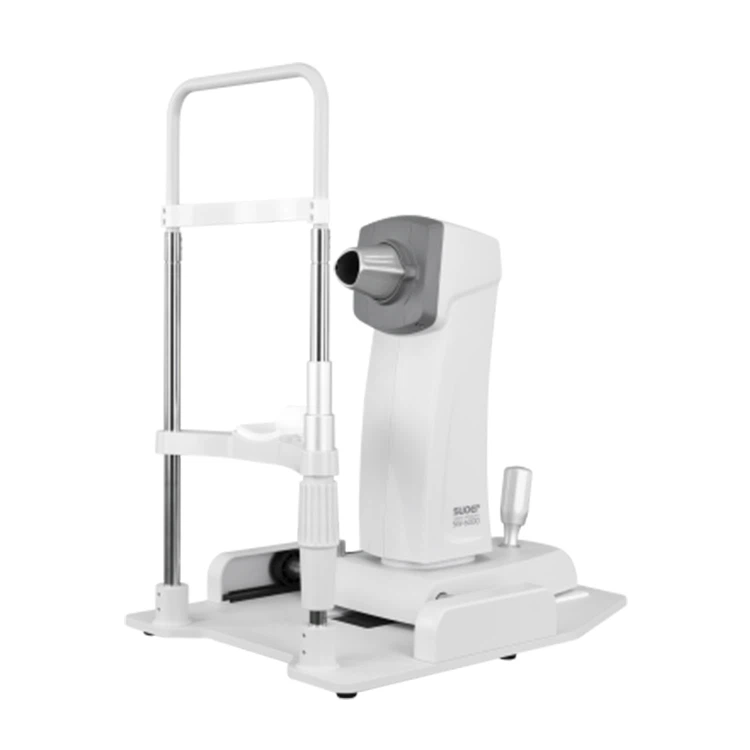
 Computerized Corneal Topography SystemSW-6000 computerized corneal topography system is a highly advanced diagnostic tool used in the analysis of corneal curvature and astigmatism. The device utilizes PLAIDO technology with a cone-shaped design consisting of 31 rings and 7936 points for a more precise and comprehensive examination of the cornea.
 OCT-500 TomographyOperation of the OCT-500 tomography is fully automated, requiring minimal human intervention. Smart pupil alignment and advanced signal optimization guarantee high-quality OCT images independent of operators.
Get Your Free Quote Now!
Professional Service
Interested? Leave your contact details.
Search Starts Here


