
Products
Search
Categories
‹
›
‹
›
Description
VisualTech (Shanghai) Corporation: Your Leading Ophthalmic Slit Lamp Supplier
VisualTech (Shanghai) Corporation, commonly referred to as VisualTech, is a professional supplier of ophthalmic equipment, optometry and ophthalmic medical instruments, as well as optical lab equipment for the eyeglasses. The company is located in the bustling metropolis of Shanghai, China. VisualTech provides comprehensive global coverage, responding to the ever-changing needs of the times. The company has adapted to the transition of traditional offline exhibition models to convenient & efficient online shopping methods. Wherever the need arises, VisualTech is there to provide its superior products and exceptional customer service.
Why Choose Us?
Professional Team
VisualTech (Shanghai) Corporation, commonly referred to as VisualTech, is a professional supplier of ophthalmic equipment, optometry and ophthalmic medical instruments, as well as optical lab equipment for the eyeglasses.
Wide Range of Products
VisualTech offers a diverse range of products to the ophthalmic industry. Includes combined tables, autorefractor, digital lensmeter, phoropter, visual charts, trial lens sets, trial frames, ophthalmic slit lamp, non-contact tonometer, fundus camera, retinoscope & ophthalmoscope, perimeter, AB scan, Biometer, dry-eye analyzer etc.
Global Shipping
Visua lTech provides comprehensive global coverage, responding to the ever-changing needs of the times. The company has adapted to the transition of traditional offline exhibition models to convenient & efficient online shopping methods. Wherever the need arises, VisualTech is there to provide its superior products and exceptional customer service.
Quality Control
VisualTech is committed to innovative self-development, constantly striving to lead the industry while adhering to the highest standards of quality. The company provides customers with high-quality, innovative and trustworthy services.
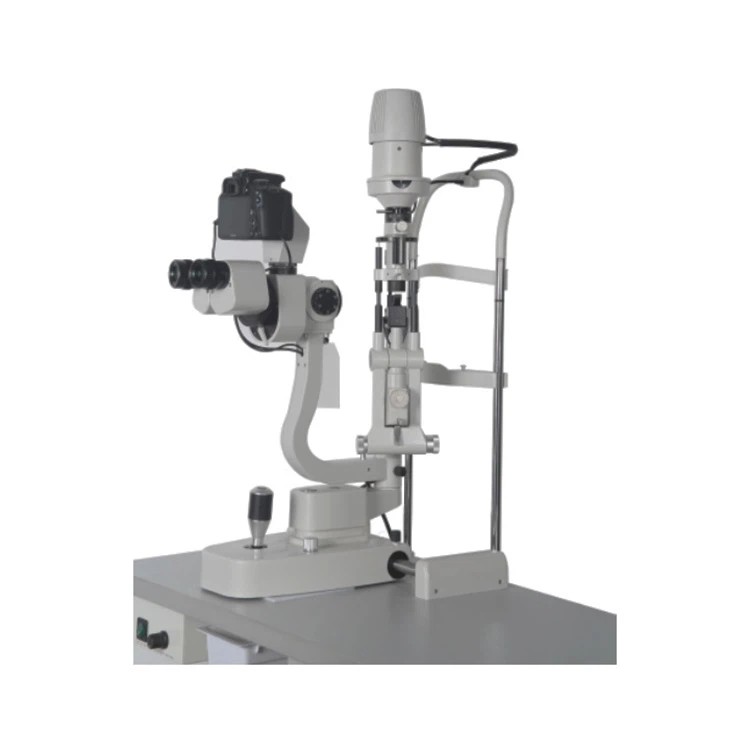
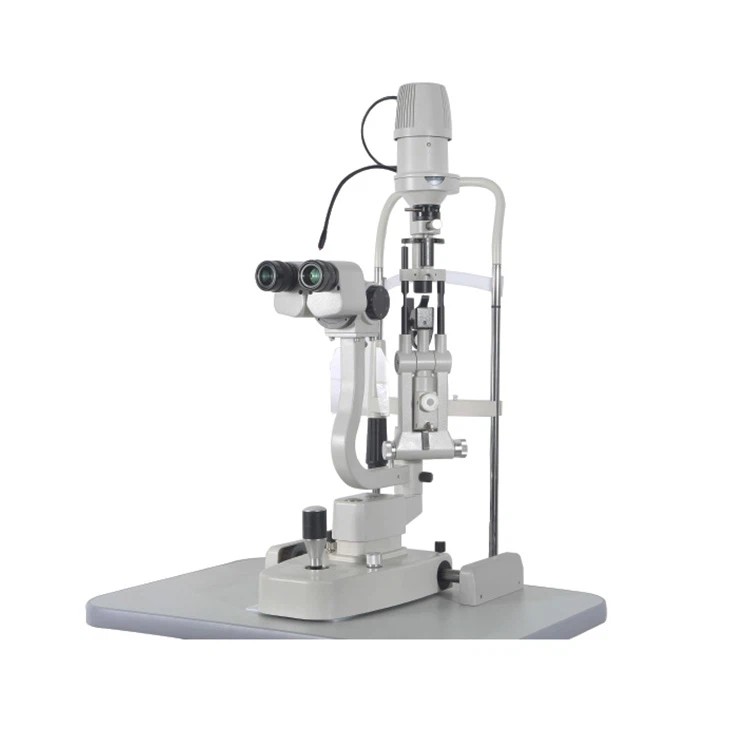
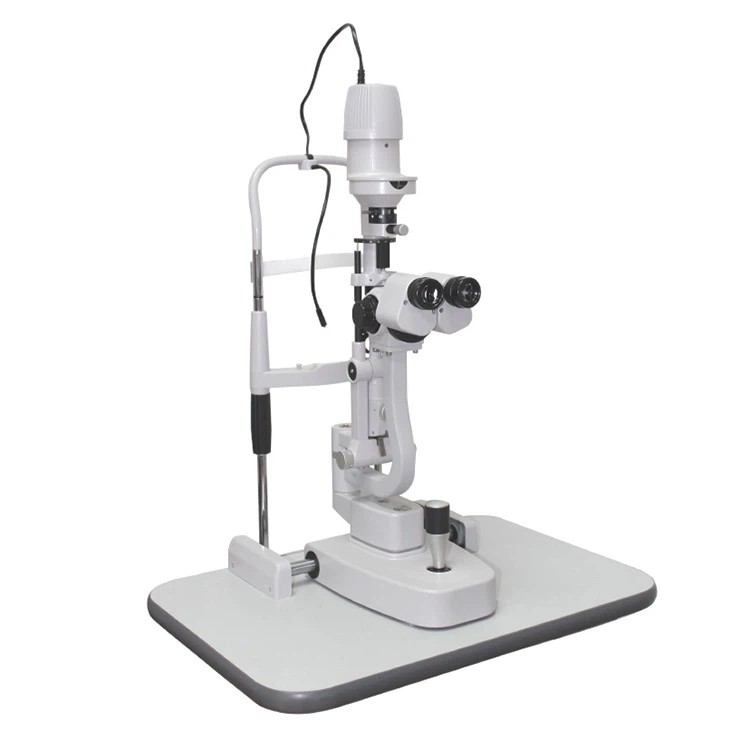
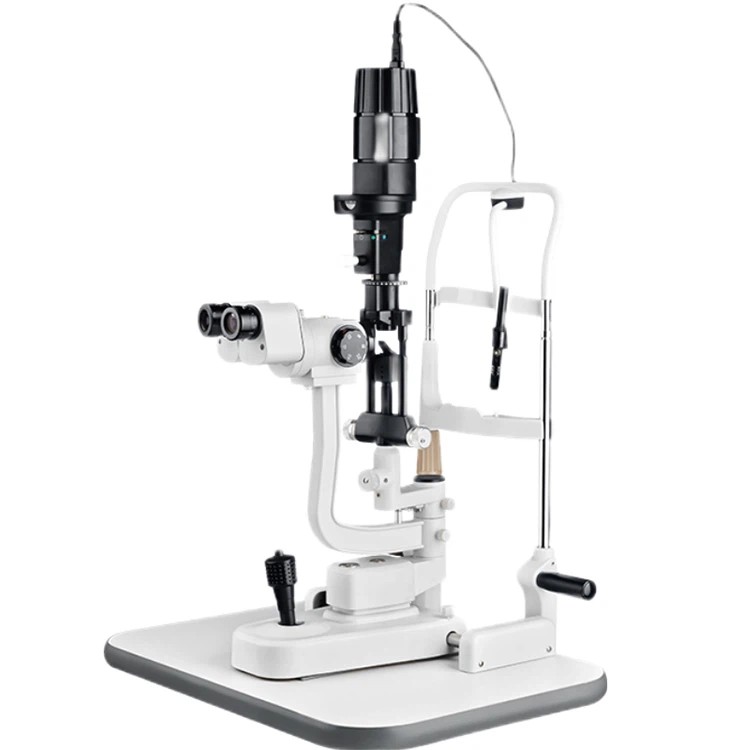
What Is Ophthalmic Slit Lamp
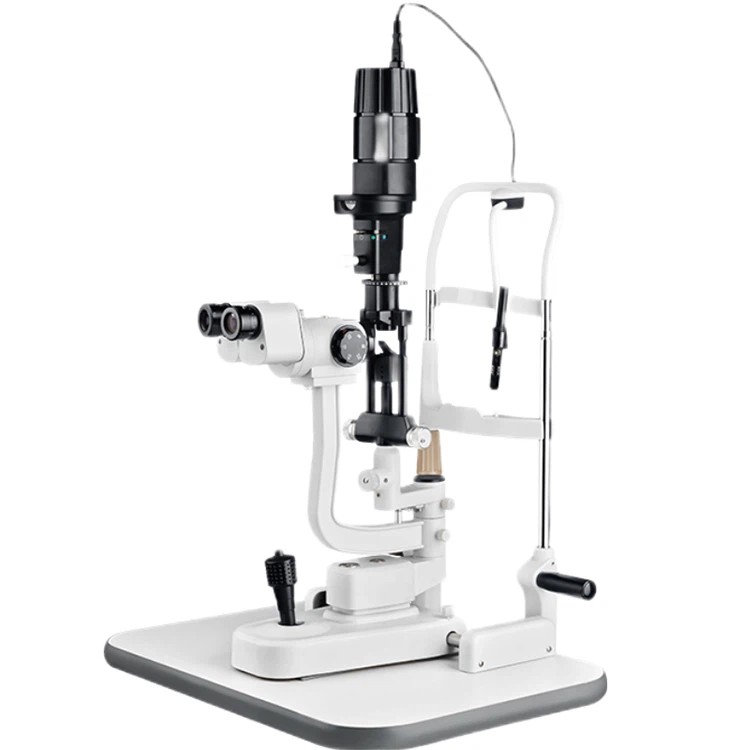
A slit-lamp, which is a specialized magnifying microscope, is used to examine the structures of the eye (including the cornea, iris, vitreous, and retina). The slit-lamp is used to examine, treat (with a laser), and photograph (with a camera) the eye. The lens of the eye is normally clear.
How to Conduct the Test: Ophthalmic Slit Lamp
slit-lamp is a low-power microscope combined with a high-intensity light source that can be focused as a thin, slit-like beam.
You will sit in a chair with the instrument placed in front of you. You will be asked to rest your chin and forehead on a support to keep your head steady.
The health care provider will examine your eyes, especially the eyelids, cornea, conjunctiva, sclera, and iris. Often a yellow dye (fluorescein) is used to help examine the cornea and tear layer. The dye is added either by touching a small strip of paper to your eye or by adding it as an eyedrop. The dye rinses out of the eye with tears as you blink.
Drops may be placed in your eyes to widen (dilate) your pupils. The drops take about 15 to 20 minutes to work. The slit-lamp examination is then repeated using another small lens held close to the eye, so the back of the eye can be examined.
What Is the Indication for a Slit Lamp Exam
The slit lamp exam may detect many diseases of the eye, including:
• Clouding of the lens of the eye (cataract)
• Injury to the cornea
• Dry eye syndrome
• Macular degeneration
• Separation of the retina from its supporting layers (retinal detachment)
• Blockage in a small artery or vein that carries blood to or from the retina (retinal vessel occlusion)
• Inherited degeneration of the retina (retinitis pigmentosa)
• Swelling and irritation of the uvea (uveitis), the middle layer of the eye
What Happens During a Slit Lamp Exam
When you sit in the examination chair, the doctor will provide a support for your chin and forehead on an apparatus to stabilize your head during the exam. Your eye doctor might administer eye drops to highlight any irregularities on your cornea's surface. These drops contain fluorescein, a yellow dye that is rinsed away by your tears. Additional drops could be used to dilate your pupils, making them larger for better examination.
The doctor will examine your eyes using a low-powered microscope and a slit lamp, which emits a high-intensity beam of light. The slit lamp is equipped with various filters to enable different perspectives of your eyes. Some clinics use technology to take digital images of your eyes, allowing for the monitoring of changes over time.
The slit lamp examination is a crucial part of a thorough eye assessment, providing a detailed view of the internal structures of the eyes.
• Conjunctiva: This is a thin, transparent layer that covers the sclera (white part) of the eye and lines the inside of the eyelids, providing a protective barrier.
• Cornea: Acting as the eye's front window, the cornea is a clear layer that covers the iris and pupil. It plays a critical role in protecting the eye and in focusing light that enters the eye toward the retina.
• Eyelids: Eyelids serve as protective shields for the eyes, guarding against foreign particles and injuries. Their blinking action spreads tears over the surface of the eye, keeping it moist and free from dryness.
• Iris: The iris, which is the part of the eye that has color, functions as a light regulator. It adjusts the size of the pupil to control the amount of light that enters the eye.
• Pupil: Located at the center of the iris, the pupil is a black circular opening that permits light to pass into the eye and reach the retina.
• Lens: Positioned just behind the iris, the lens focuses incoming light onto the retina to create clear images.
• Sclera: Known as the white of the eye, the sclera is made of tough fibrous tissue. It forms the eye's outer layer, offering support and protection.
• Retina: The retina is a layer at the back of the eyeball containing cells sensitive to light. These cells convert light into electrical signals, which are transmitted to the brain via the optic nerve.
How Do You Check Eye Pressure with a Slit Lamp
There are many different ways to measure eye pressure. One such method is a painless procedure, called "applanation tonometry." The term applanate means to flatten.
In this test, the eyes are anesthetized with numbing drops. In addition, a small amount of non-toxic dye is placed in the eye. Your ophthalmologist will instruct you to position your head into a device called the slit lamp. Then, a small tip gently touches the surface of the eye and the eye pressure is measured. The eye pressure is measured based on the force required to gently flatten a fixed area of the cornea.
This test can be affected by various conditions, such as when there is too much or too little dye present in the eye, or depending on the thickness or thinness of the cornea. We know that in thin corneas, which can occur naturally or be induced because a patient has had laser correction eye surgery, the eye pressure measured with this device can be artificially low. In addition, naturally thin corneas are an independent risk factor for glaucoma, so measurement of corneal thickness is part of a comprehensive eye exam and should be performed at your initial and/or subsequent visits.
What Are the Dry Eye Signs on a Slit Lamp
Patients who have dry eye often complain of eye irritation, a gritty or foreign body sensation, burning, tearing, photophobia, stinging, or intermittent sharp pain. Blurry vision that improves with blinking or instillation of nonviscous artificial tears, albeit temporarily, is also common. Dry eye patients may have all, some, or none of these symptoms. A careful history-taking contributes greatly to a correct diagnosis.
If a patient complains of discomfort upon awakening, this may indicate nocturnal lagophthalmos. The clinician can then look for inferior punctate corneal erosions and poor lid closure after asking the patient to close their lids like they do when they sleep at night. The patient history can guide a more focused slit-lamp examination helping to identify certain ocular manifestations.
A thorough slit-lamp examination should be done before performing any other tests, which may alter or mask some of the relevant findings on examination, resulting in a possible misdiagnosis. Dry eye signs identified on slit-lamp examination include superficial corneal erosions, inadequate tear lake volume, early tear film break-up time, conjunctival hyperemia, conjunctival surface irregularities, and meibomian gland dysfunction.
How Long Is a Slit Lamp Exam
Most of the time, a slit lamp examination is done by an ophthalmologist or optometrist. In some cases, a family doctor or an emergency medicine specialist may do the test.
• The doctor may put one or more types of drops in your eye. Dilating drops may be used to make the opening (pupil) in the centre of the eye bigger. This makes it easier for the doctor to see the structures of your eye. Numbing drops may be used if a foreign object is to be removed or if eye pressure is being checked (tonometry). In some cases, fluorescein dye is used.
• You will sit in a chair and rest your chin and forehead against bars on the slit lamp. The lights in the room will be dimmed.
• The slit lamp will be placed in front of your eyes, in line with the doctor's eyes. Focus your eyes in the direction the doctor tells you to. Try to hold your eyes steady without blinking.
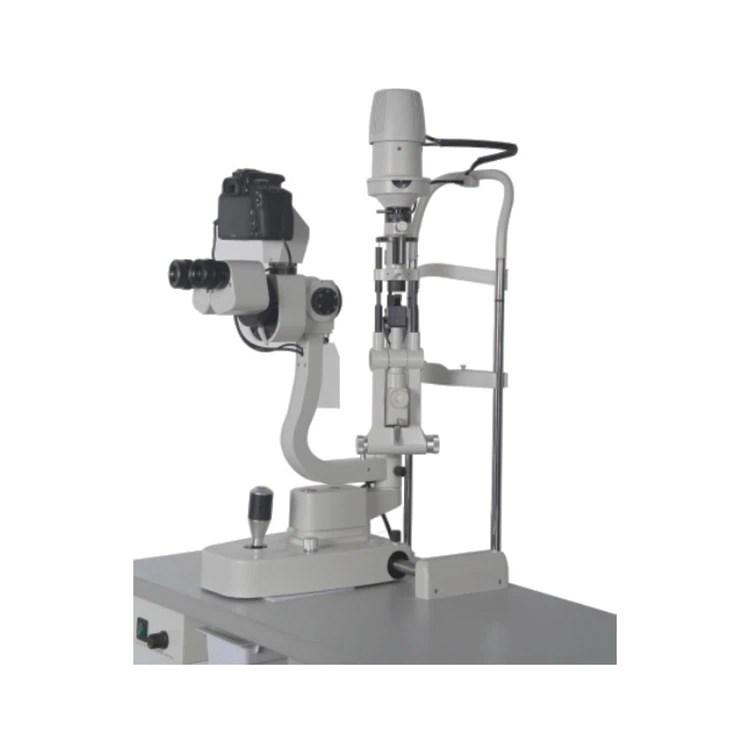
• A narrow beam of bright light from the slit lamp is directed into your eye while the doctor looks through the microscope. In some cases, a camera may be attached to the slit lamp to take pictures of different parts of the eye.
A test called fluorescein staining may be done along with a slit lamp examination.
• During this test, your doctor applies a dye called fluorescein. The dye comes in an eyedrop or as a paper strip that is gently touched to the inside of your lower eyelid. The dye dissolves in your tears, coats your cornea, and collects for a short time in any scratches or other abnormal areas. The rest of the dye is washed away by your tears.
• Your doctor shines a light onto your eye. The fluorescein dye shows up under the light. It helps the doctor to see scratches, ulcers, burns, or areas of irritation from an infection or dryness. A slit lamp examination takes about 5 to 10 minutes.
How Many Parts Are There in Slit Lamp
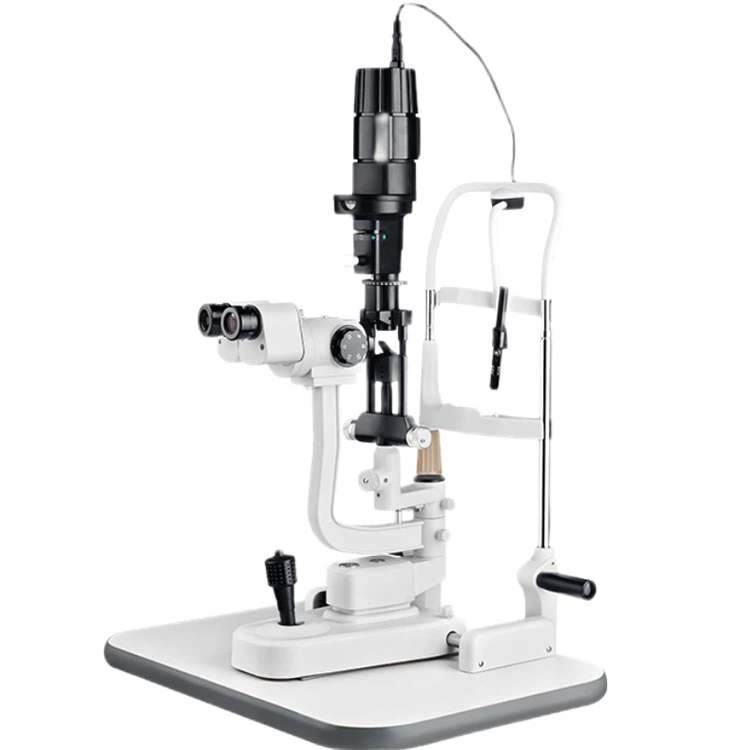
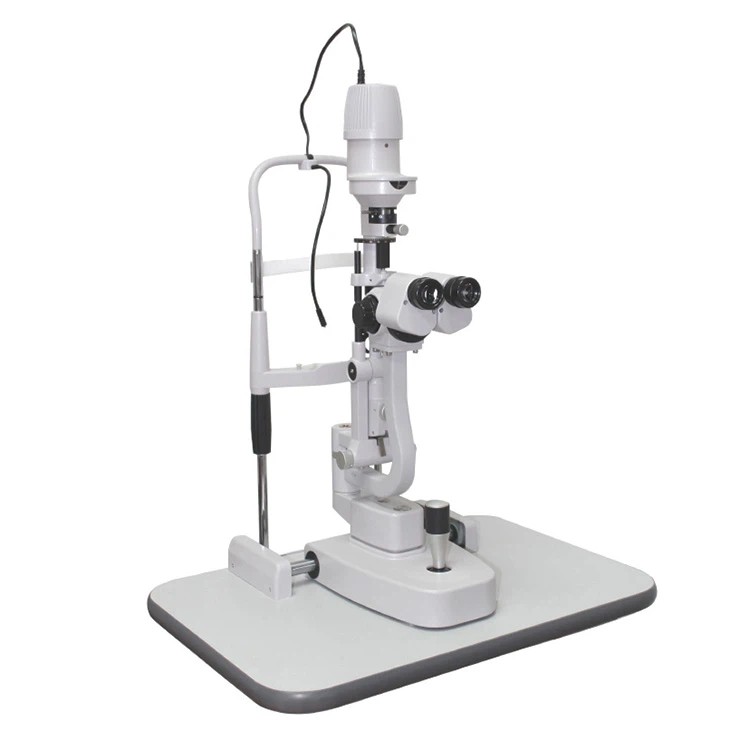
The slit lamp comprises two main parts: the illumination arm and the viewing arm. The illumination arm has a light source which goes through a slit beam, and the viewing arm comprises two eyepieces and a biomicroscope.
Both arms of the slit lamp rest on a base. Under the base is the switch to turn the slit lamp on.
The base has a height-adjustable table with its own switch and buttons.
The slit lamp base is on an axle and rails, which enables coarse anterior-posterior and lateral movement. It has a locking screw that must be fully unscrewed in the counterclockwise direction before the slit lamp can be moved.
The joystick can push the entire slit lamp base to attain approximate focus. The joystick can then be gently tilted for fine movements to bring the image into sharp focus.
Turning the joystick clockwise lifts the entire column up, and a counter-clockwise motion brings it down.
The intensity knob (rheostat) is used to adjust the intensity of the light source. The pictured rheostat is in the off position.
The patient's head rests against the support frame: this consists of a forehead rest and a chin rest, the height of which may be adjusted using the adjustment knob.
The canthus indicator is a black line which should be level with the lateral canthus of the patient's eye.
The illumination arm contains the light source; this has an adjustable lever with different filter types. The lever in the far left position is in the "open" position (i.e. unfiltered light).
The beam height can be adjusted via the centre screw. Pictured is a beam height set to 10mm. The cobalt blue light (for fluorescein examination) can be found by rotating the screw counter-clockwise until a click is heard and the dial reads "B".
The beam width can be adjusted via the slit adjustment controls on either side of the base of the illumination arm.
The viewing arm consists of two eyepieces, which may be adjusted for the examiner's interpupillary distance and refractive power. It is generally recommended to keep glasses or contact lenses on and set the power to 0. The magnification control dial is on the side of the biomicroscope.
Our Certificate

FAQ
Q: What is the difference between OCT and slit lamp?
Q: What is the difference between a slit lamp and an ophthalmoscope?
Q: What is a slit lamp for conjunctivitis?
Q: What is the indication for a slit lamp exam?
• Clouding of the lens of the eye (cataract)
• Injury to the cornea
• Dry eye syndrome
• Macular degeneration
• Separation of the retina from its supporting layers (retinal detachment)
• Blockage in a small artery or vein that carries blood to or from the retina (retinal vessel occlusion)
• Inherited degeneration of the retina (retinitis pigmentosa)
• Swelling and irritation of the uvea (uveitis), the middle layer of the eye
Q: Can a slit lamp see the retina?
Q: What is the slit lamp exam also known as?
Q: Can slit lamp be used for fundoscopy?
Q: What is the purpose of the slit lamp in eye surgery?
Q: What is the principle of a slit lamp?
Q: How to see cells on a slit lamp?
Q: What can be found in ophthalmology slit lamp exam?
Q: What are the slit lamp findings of conjunctivitis?
Q: How do you check eye pressure with a slit lamp?
Q: What are the dry eye signs on a slit lamp?
Q: What is the medical term slit lamp exam?
Q: What is the purpose of a slit lamp?
Q: How long is a slit lamp exam?
Q: What color is a slit lamp?
Q: Are slit lamps safe?
Q: How many parts are there in slit lamp?
Specifications
Related Products
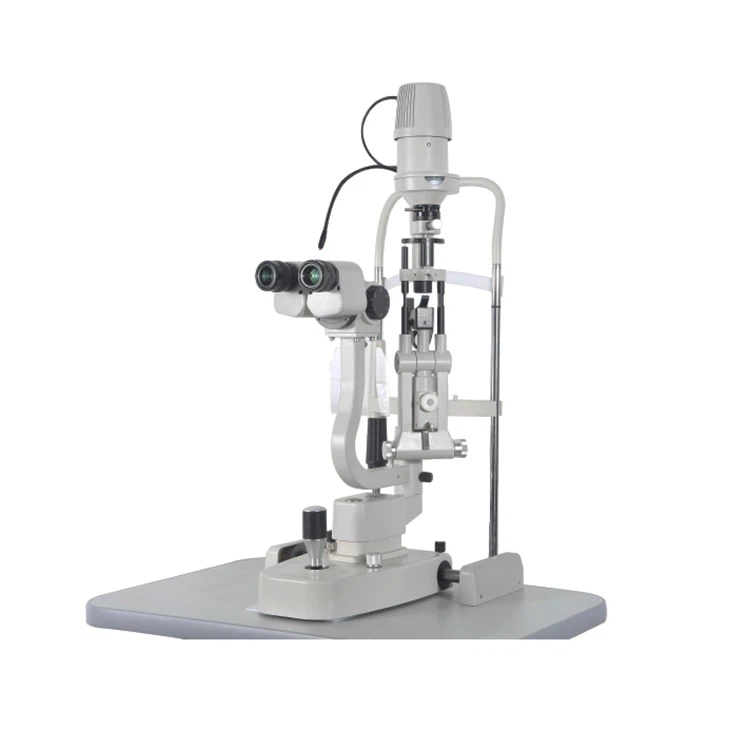
 Digital Slit Lamp with SoftwareHigh-resolution images: LS-5 produces high-resolution images that accurately represent the anterior segment of the eye and posterior capsule.
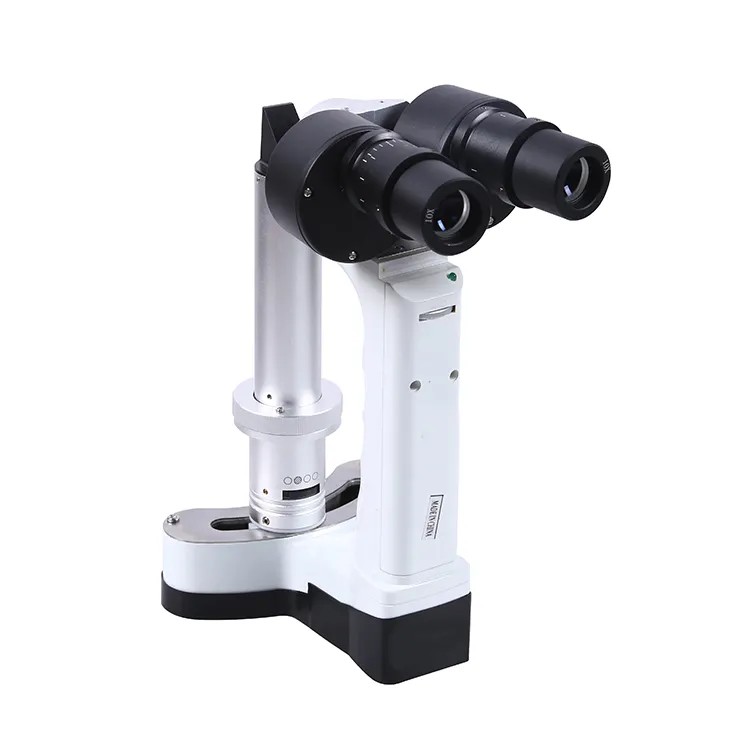
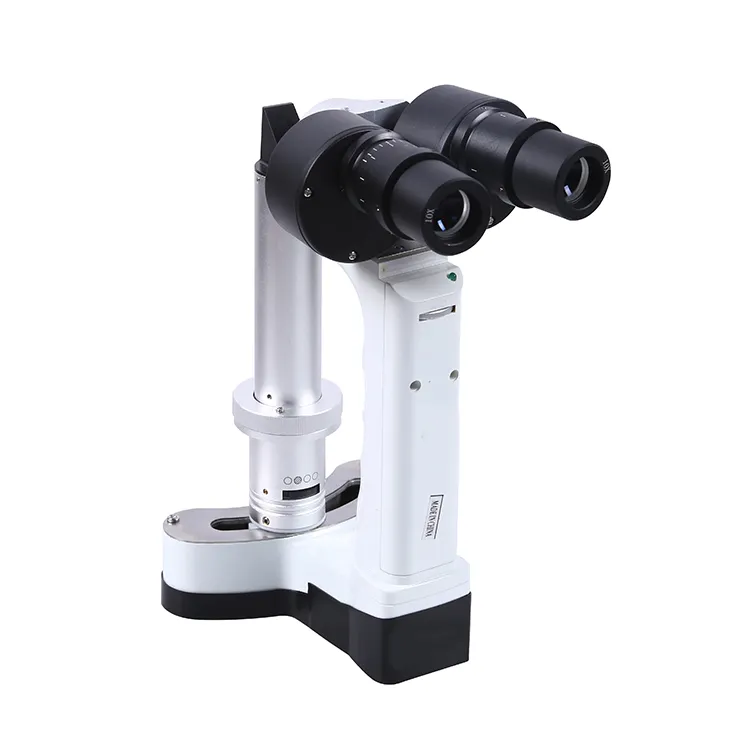
 Classic Handheld Slit LampA handheld slit lamp is an instrument used by eye care professionals to examine the eye and diagnose various eye conditions. It is a handy tool that allows them to assess the eye's structure and function, including the cornea, iris, lens, vitreous, and retina.
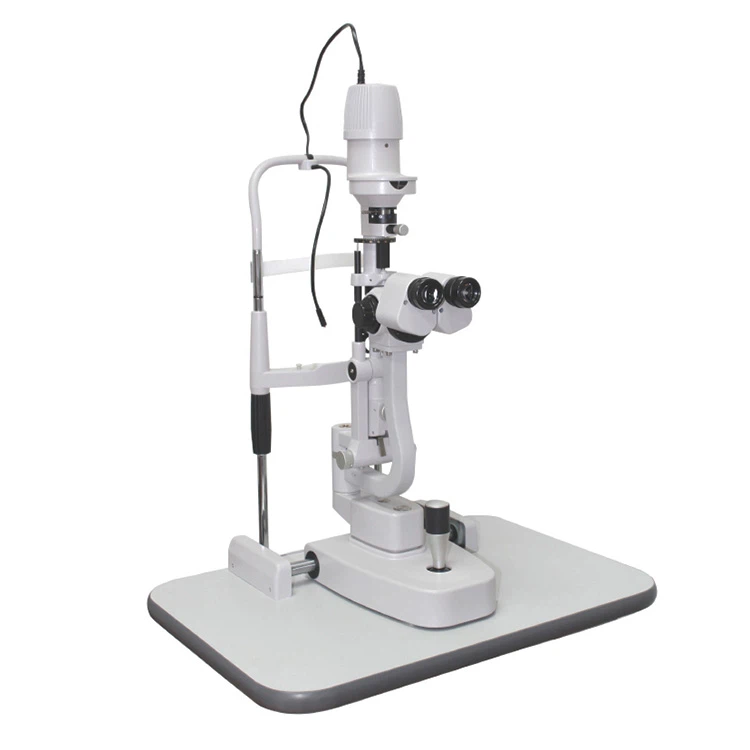
 Sunkingdom Slit LampLS-4 Sunkingdom slit lamp is a high-quality Haag-Streit type, Galilean system slit lamp. 5-step revolving drum and 14mm broad beam ensures that eye health professionals can accurately diagnose various eye conditions.
 LED Slit LampLS-3OphthalmicLEDslit Lampisanentry-levelproduct that provides exceptional performance It uses awarm LEDlight sourceto ensurethat the colorisacuratelrepoducdresultnginopimalobservationoutomes
Thelong life-span LED also ensures lowenergy consumption
Get Your Free Quote Now!
Professional Service
Interested? Leave your contact details.
Search Starts Here


