
Products
Search
Categories
‹
›
‹
›
Description
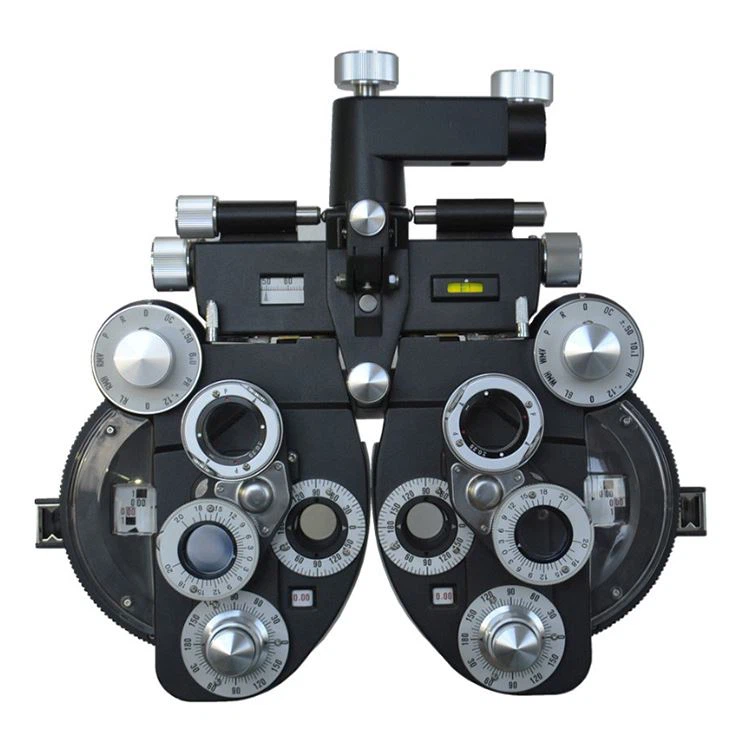
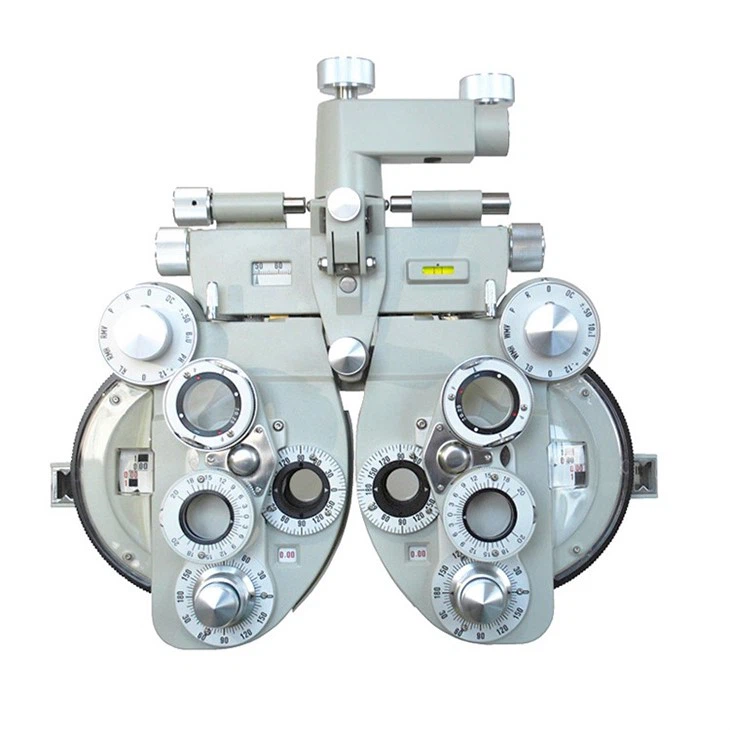
VT-5C OPTOMETRY PHOROPTER
The optometry phoropter is a crucial instrument in the optometric process. After checking the diopter with an autorefractor,
we can further examine using the phoropter to obtain a more accurate diopter measurement.
Color options: white or black.
Main compositions:
A) Phoropter main body
B) Instruction manual
C) Dustproof cover
D) Near point rod
E) Near point chart clamp
F) Rotating near point chart
G) Accessory box
H) Eyepiece loading and unloading blade
I) Fastening bolt
J) Additional lens
Why Are Optometry Phoropters Important?
Lorem ipsum dolor sit, amet consectetur adipisicing elit.
Accuracy
Phoropters provide highly accurate measurements of refractive errors, ensuring that prescriptions are tailored to each individual's unique visual needs.
Diagnostic Tool
They help diagnose various eye conditions and assess the overall health of the eyes beyond just visual acuity.
Patient Interaction
The process of using a phoropter involves direct interaction between the optometrist and the patient, allowing for personalized adjustments based on real-time feedback.
Prescription Refinement
Phoropters allow optometrists to refine prescriptions based on subjective feedback from patients, ensuring the final prescription provides optimal vision correction.
What a Optometry Phoropter Can Do?
01. Measure refractive error
The phoropter can help determine the correct prescription for corrective lenses, allowing an eye doctor to know the degree of nearsightedness, farsightedness, and astigmatism a patient has.
02.Test visual acuity
The phoropter can help test visual acuity or how well a patient can see at different distances, which is necessary to assess one's vision and determine the appropriate corrective lens prescription.
03.Determine binocular vision
The phoropter can help assess how well a person's eyes work together, essential for evaluating overall vision health.
04.Assess accommodative function
We can also use a phoropter can also be used to evaluate how well a patient can focus on objects at different distances, which is essential for diagnosing specific vision problems.
Specifications
Sphere powers range
+16.75D to -19.00D, with minimum reading of 0.25D or 0.12D (when using +0.12D auxiliary lens or optional +0.12D lens)
Cylinder powers range
0 to -6.00D, with minimum reading of 0.25D or 0.12D (when auxiliary lens is in use)
0 to -8.00D (when -2.00D auxiliary lens is in use)
Astigmatic axis scale: 0° to 180°, each step is 5°
Cross cylinder: +0.25D, reversal type (synchronized with astigmatic axis), also can select +0.50D
Rotary prism: 0 to 20D, each step is 1D
Interpupillary adjustment: 50mm to 80mm, each step is 1mm
Forehead rest adjustment: 16mm backward and forward
Convergence
The optical axes of the lenses are aligned at a distance of 400mm from the vertexes of the corneas (2mm inward for right and left)
Interpupillary distance enabling convergence = 57mm to 80mm
Corneal distance device: 2mm forward and 5mm backward from the standard plane with scale
Effective visual range: 19mm
Weight: 7kg
Dimensions: 55cm (length) x 44cm (width) x 25cm (height)
Related Products
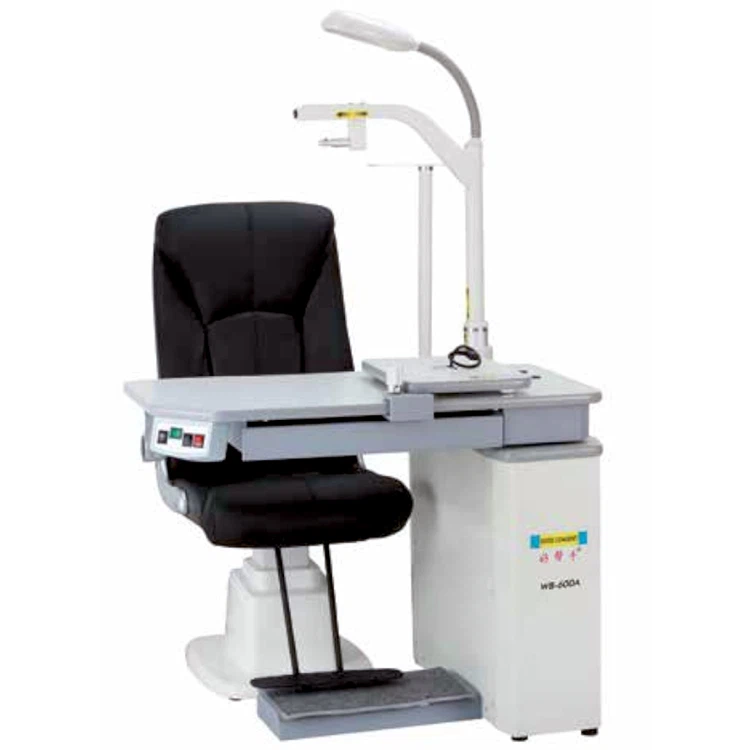
 Optometry PhoropterThe optometry phoropter is a crucial instrument in the optometric process. After checking the diopter with an autorefractor, we can further examine using the phoropter to obtain a more accurate diopter measurement.
 Classic Refraction UnitThis classic refraction unit features a multifunctional operating button located on the left side of the desktop. This button allows the operator to easily control the lighting, adjust the chair's height, and manage the movement of the instruments. This seamless and stress-free workflow enhances the ophthalmologist's experience.
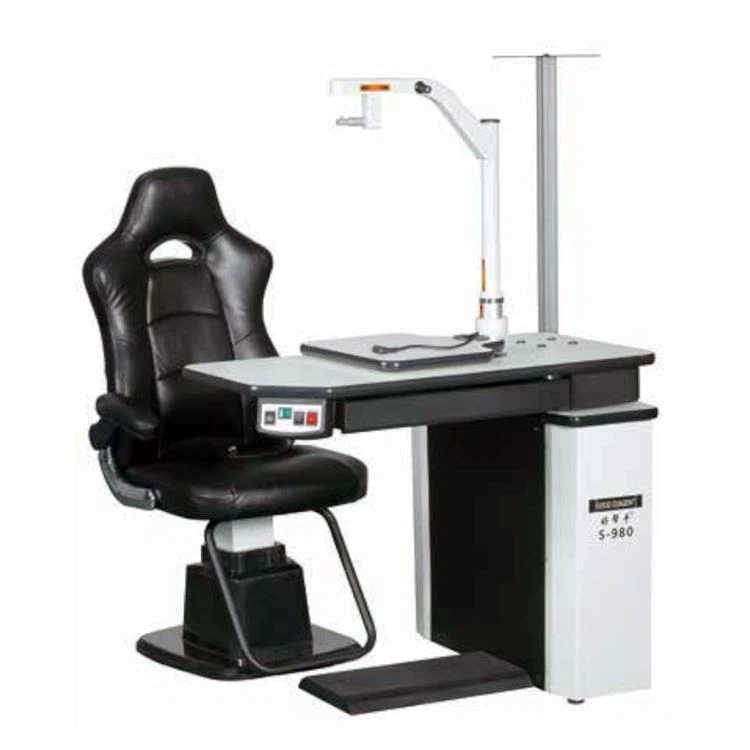
 Advanced Ophthalmic UnitWith its simple and sleek design, this ophthalmic unit is equipped with essential functional areas. The predominantly black and white color scheme creates a harmonious and beautiful combination table.
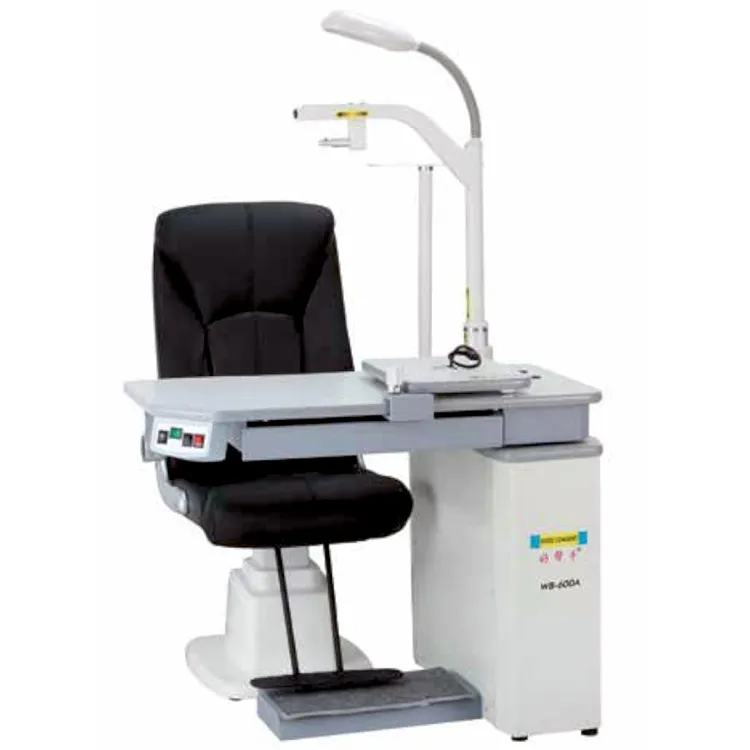
 Basic Refraction Chair UnitThe ophthalmic refraction unit is an essential piece of equipment designed to provide necessary support to ophthalmologists and optometrists in their practice.
Get Your Free Quote Now!
Professional Service
Interested? Leave your contact details.
Search Starts Here


